Anderycks.Net by Deryck Hodge logo

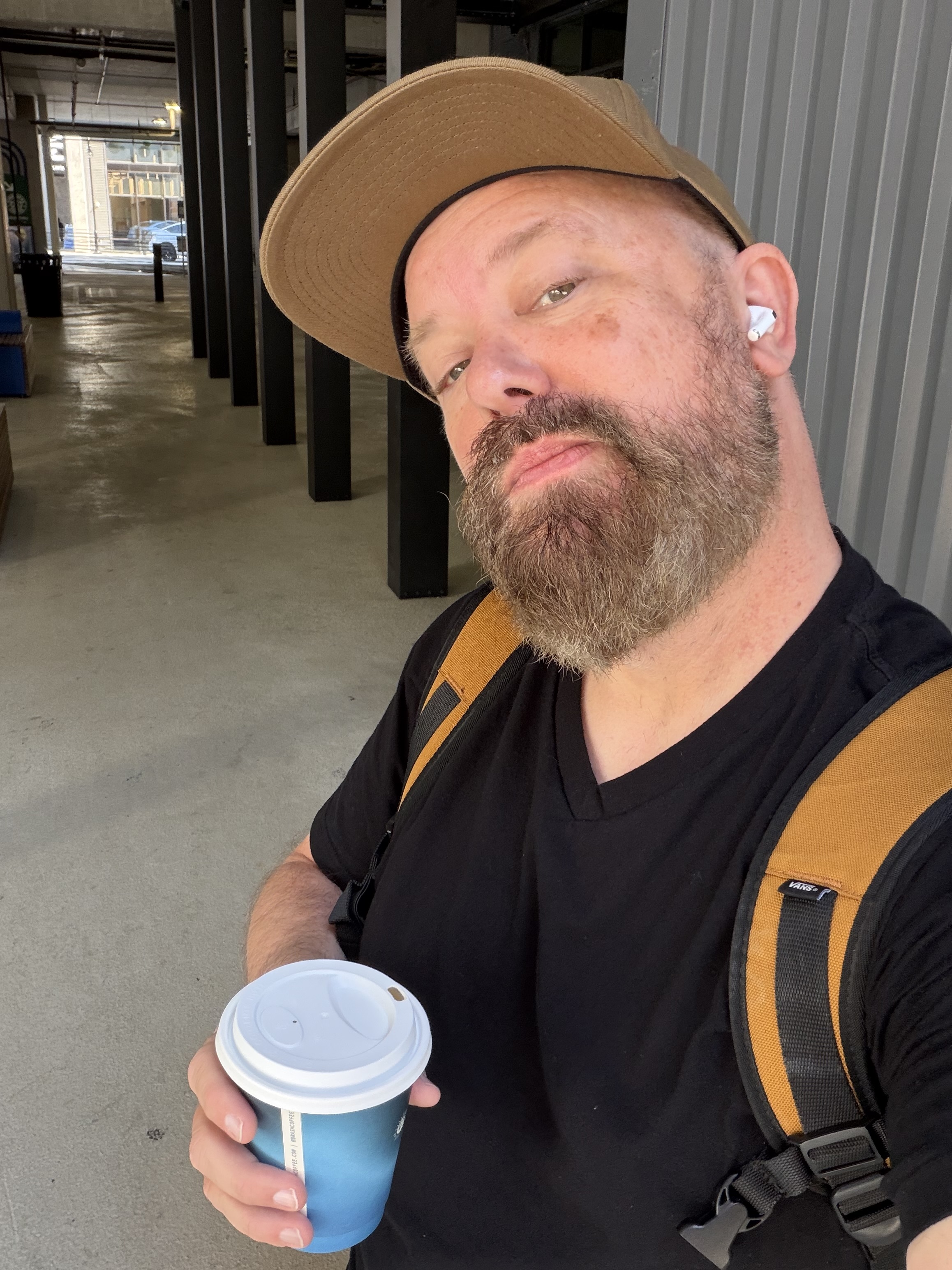
I'm Deryck Hodge. This is my personal site.

I am a writer turned software engineer working in news and media.

Humanism, Religion, and Disney Vacations too

I had this thought while trying to make sense of all the week’s news. Recent stories about the chaos of business and the greed of tech are an almost weekly feature these days. It's so exhausting. That thought I had: when did humanism go out of fashion?

Which is also to say: how did I end up here?

I never imagined a life for myself in tech and business. It was an accident, the kind of accident born from a conflagration of circumstances. One thing leads to another, then consumes your life, and here you are.


As a kid, I thought I’d write or draw comic books. I was a little artsy nerd. Then I found music, and the world opened for me, both literally and figuratively. I left home to be a touring musician. After a few years of that, I started to split time between touring and going to school for an English degree. College brought me back around to writing. I’d like to think I started to take writing seriously. I imagined then that I would write literary fiction and be a teacher. Maybe even a professor.

During that time, I took a geography class to satisfy some core curriculum requirement. The geography professor was excited by the early web, and for a couple weeks, we learned to build web sites by hand to host our class projects. I was hooked on web development. I imagined using the web as a means to share my writing. I was one of those naive 90s web enthusiasts. I saw the web as a tool in the hands of artists, professors, and writers. It was more text than technology for me.

I started to grad school, while also doing more and more on the web. I was an older student, already married a decade at that point, and my wife and I were ready to have children. I better get a real job, I thought, and after a year of teaching high school English, I took my first technical job at Auburn University Libraries.

From there, it was a developer role for a small newspaper. Then, the Washington Post. Canonical. Amazon. Disney. Apple. Some others sprinkled between, and now, CNN at Warner Bros. Discovery. (God rest its soul.)

The web has been good to me. I really shouldn’t complain.


Liberal arts degrees, like an English degree, spend a lot of time on the early Renaissance and the beginnings of humanism. It’s that moment in time when modern, rational thought took hold. You can draw a straight line from the Renaissance to classical liberalism, from rational thought to modern science, from humanism to democracy.

It makes sense to focus on it. We are who we are today because of humanism.

You cannot, however, truly understand humanism without understanding the context into which it was born. It seems simplistic today, but back then, it was religion versus reason. Religion granted authority to kings. It forced servitude. You didn’t matter. The church mattered. Land mattered. Your relationship to the land as nobility or peasant mattered.

Humanism came along and said everyone mattered because of individual worth and agency. It wasn’t God who gave you meaning. It was your own existence. It was a radical idea, and though modern churches still denounce humanism, especially in evangelical circles, most religious folks — at least here in the western world — recognize individual liberty and personal autonomy as basic human rights.

That’s humanism.


When I say I never thought I’d build a life for myself in tech and business, I mean that it wasn't even imaginable to me. I grew up splitting time between two households. My parents were divorced. In my dad’s house, it was the Wall Street Journal over breakfast. In my mom’s, it was tears of regret over coffee and a cigarette.

I never wanted much to do with either approach, largely because both seemed hollow. Business felt like a stuffy, greedy endeavor. Those tears of regret for my mom — they were born in religious superstition.

Religion and business were things best avoided at all costs.


I had to attend Christian school from ages 10-14 years old. It was oppressive and insulting. A pastor who was also my teacher at school told me I would never be a real man because I lived alone with my mom. The pastor didn't know, or couldn't be bothered to learn, that I spent Christmases and summers with my dad. People select facts that fit the narratives they want to tell, both then and now.

I have this vivid memory from my days in Christian school. I don’t remember the exact age, but I was young. I’m guessing elementary school aged.

I took a trip to Disney with my grandparents on my dad’s side. They were the best, the one part of my family that seemed normal and loving. I was excited about this trip and talked about it at school. I’ve always been a talker, always loved a good story. Then, the first Sunday after sharing my excitement at school, the pastor — the same one who said I would never be a man — preached on the evils of Disney and how good Christians would boycott that filth.

Boycotts are the modern age’s religious sacrament, a way to advertise one’s devotion via the most consumer-friendly means possible. I grew up with boycotts. I also see boycotts regularly employed by my circle of liberal, technological friends. Don't drive a Tesla; Elon is evil! AI, the end of humanity! And, of course. Social media is the cause of all that ails society!

It’s funny how there isn’t much daylight between the religious fundamentalists I grew up with and the techno-fundamentalists who make up my professional circle. Fundamentalism is convenient. It’s a way to draw a line in the sand. Us versus them. Heathen versus religious. Owner versus employee.


I guess the path I’ve taken has made it less clean and easy for me. I think of myself as a person of faith, at least in the "substance of things hoped for" sense, but I still see the harm organized religion causes. I’m an intellect and welcome deep, thoughtful engagement with life, but I don’t feel trapped in my mind. I’m a creative person, I hope an artist even, but I earn my living from a mostly boring, corporate job. I'm equal parts writer and web developer.

I’m an individual, all messy and complicated and hard to pin down, and that’s ok. That’s how it should be. We need more of that. More individualism, less dogma. More learning and understanding. More celebration of what makes us unique as human beings. If we had more of that, there'd be less corproate greed, less desire to see humanity replaced by computers. That’s what humanism taught me. So more of that please, and more Disney vacations, too.

FWIW, Disney vacations are still my favorite.

The True Cost of Principles

Yesterday morning, over coffee, I was reading the latest Benedict Evans newsletter. In the section "Principles cost money," Ben quoted from advertising legend Bill Bernbach:

The ad industry guru Bill Bernbach said “it’s not a principle until it costs you money”. I left Twitter two years ago. It probably cost me money.

I followed to Ben's newsletter from this post of his on Threads:

Tim Cook has spent a decade or two talking about principles and ‘fundamental human rights rights’ and putting rainbow flags and ‘allyship’ on Apple surfaces, and then he goes to watch a movie at the White House, and says nothing.

“It’s only a principle if it costs you money”

This struck me profoundly and deeply. I've been feeling the collision of my principles and my own relationship to tech, to politics, to culture for at least the last year.

I think seriously about returning to Linux, to get out of the Apple ecosystem, but I go back to my Mac after a month. It's hard. Well no, not hard. Inconvenient. I miss the apps I love. I miss the ease with which my digital life carries with me across devices, anchored and mobile, all at once.

I think about leaving social media entirely – to be clear, I'm not that active now – but then FOMO takes over. sigh. That FOMO. It's a force, invisible and centrifugal, like that black hole at the center of our galaxy. You don't realize it's there, but you're trapped in orbit around it.

Then, there are all the other things I mentally charge toward and then back flip away from.

I should retire from tech, build a business for myself. No, I can still make a 10 year run somewhere.

Writing, that's all I've ever wanted to do. No, I've been a developer so long, that's what I really am.

Stop using gen AI, it's sleazy. But this comic I made with the help of AI, it's kind of cool!

Today, I realized. It's the cost that keeps me trapped in this spin of indecision. It's the cost, the loss, that I want to avoid. Maybe not money, but it's something. Loss of pride, that fear of looking silly or dumb. Loss of respect, of getting found out for the true lack of depth of understanding and commitment I carry with me. Failure, that true loss, the true cost you might pay for trying to be more than you are.

In our modern world, money is the surest test of success. It's the thing Benedict Evans knows most well. He is primarily devoted to investments and business, and so, it's the framework that makes things make sense to him. But loss of any sort, it's the thing we all most want to avoid. Loss is the real cost, and if your principles don't carry with them the risk of true, fundamental loss, they must not be principles at all.

The Obligatory 2026 Post

The new year is here, and I'm naturally in a reflective mood. What a year 2025 was for me. I changed jobs, saw my youngest graduate and start college, moved twice, and so much more. I expect 2026 to be less chaotic and more focused. At least that’s what I’m hoping for. 

I've never been one for New Year's resolutions. I don't like the idea of making plans once and executing on them. I'm more of a be in the moment and adjust as you go kind of person. But even with that, I can't help but look ahead and think about what I'd like to get done this year.

Let's start with my work at CNN.

To say I'm grateful for this job is an understatement. My prior two roles didn't work out as I had hoped. I was starting to get a bit down about my ability to land something that could be a long-term role for me. CNN came along at the perfect time. I've now got a role where I enjoy the work I do, it's a good technical fit for me and my expertise, and I've got great colleagues to share the journey with. I want to maintain that, so any plans I have around work are to be consistent in my role and try to grow within it.

We're doing more with Rust and edge compute, so I want to really learn Rust well this year. I've dabbled before, and I know enough Rust to be dangerous. I want to grow my technical expertise there. I also want to re-up my connection to Python and the Python community. I'm thinking of going to PyCon this year. For all my experience in Python and its open source community, I've never been to a PyCon. I hope to change that this year. I'm thinking about re:Invent this year too. AWS is a mainstay in my toolkit, both personally and at work, and I'd like to be more involved in re:Invent, even if it's the end of the year before we get there.

Outside of work, I'd like to spend more time with the things that help me feel more present.

One of those is travel with my wife. We're empty nesters now, and we've been talking about taking more weekend getaways. It feels cliche to say it, but it's true – my wife Wendy really is my best friend. We enjoy each other's company, and we love travel. I'm excited about visiting nice locales within a day trip of Atlanta. I hope to literally get away more as often as we can.

I also want to find some opportunities to play more of the Marvel Multiverse Role-Playing Game with friends or other local Atlanta players. I love superheros, comics, and playing games with friends. MMRPG combines all those. I took up the game a little over a year and played a few times last year. I'd like to really lean in this year and play more, especially in person with others in Atlanta.

So 2026, here we go. Onward and upward. More focus. More living in the present. And hopefully I'll do a little better at sharing updates on all that here on my blog.

Weekend Plans

Reading

  • The Ministry of Time by Kaliane Bradley. Cannot put this down or say enough good things about how I’m enjoying this book.
  • Catching up on a bunch of tech news pieces and blog posts I marked in Tapestry.

Watching 

  • Latest episode of Pluribus — I can’t say enough good things about this show.
  • Binging Outlander with my wife. We’re currently starting on Season 4.

And speaking of Outlander…

We’re going to the GA Renaissance Festival on Saturday. My daughter loves it, and my wife and I are going to check it out. I’m going in Scottish Highland attire.

My family is giving me no end of grief  suddenly getting in touch with my Scottish heritage since watching Outlander. But it’s a fun escape this weekend, and feels overdue with the week behind.

Being Present When We Live in the Future

I’m thinking a lot about writing lately. I also spend a lot of my time working on technology. There’s actually a tension there. It might not be obvious, but it’s there. Writing is about slowing down, savoring the language. Every. Single. Word. Technology is about speeding things up, about doing more with less. The oft talked about, and (depending on your perspective) dreaded: productivity.

I was out walking earlier this week, here in Atlanta, maybe headed into work, maybe out for exercise. I was on this part of a street near my home where the trees dotted both sides of the road as it stretched out toward the horizon. High-rise apartments and corporate offices stood off in the distance, reaching into the clear, blue sky. People were walking by, listening to music on their iPhones. The AirPods were the give away. A lone Uber delivery robot was creeping up the sidewalk across from me, and I thought, “Wow, I’m living in the present and the future, all at the same time.”

That’s writing and technology. One takes us into the future, the other makes us present. The world is a little slanted toward technology at this point, and it shows. We're starting to wear under the weight of that singularity. There's a work around, though. It's being present and writing about it.

Jmail: Epstein Emails as Gmail Clone

This is one of the coolest things I've seen in awhile. Jmail (via Daring Fireball). This whole thing is so clever, the way it mimics the look and feel of Gmail, including the supposed "AI Overview" explaining the site.

You are logged in as Jeffrey Epstein, jeevacation@gmail.com. These are real emails released by Congress. Explore by name, contribute to the starred list, search, or visit a random page.

Good engineering as a way into AI coding tools

I don't remember where I stumbled on this, maybe Mastodon, but I've had this post in my reading queue for a bit: You’re probably listening to the wrong people about AI coding.

A lot of less experienced and mediocre engineers likely think these tools are brilliant. They’re producing more code, feeling productive. The problem is they don’t see the quality problems they’re creating.

This is compared to the experienced coder.

They’ve lived with the consequences of bad code and learnt what good code looks like. When they look at AI-generated code, they see technical debt being created at scale. Without proper guidance, AI-generated code is pretty terrible. Their scepticism is rational.

Then, this paragraph really caught my eye:

I’ve regularly seen sceptical experienced engineers change their view once they’ve been shown how you can blend modern/XP practices with AI assisted coding.

I got caught up in this "modern/XP practices" phrase. I was like, "are we talking about Extreme Programming here?" I hadn't really thought about that in a while, or considered it "modern." So I went and looked it up to remind myself and found this Martin Fowler post on extreme programming from a decade ago.

XP was one of the first agile methods, indeed XP was the dominant agile method in the late 90s and early 00s before Scrum became dominant as the noughties passed. 

For a lot of folks today, "scrum" is synonymous with "agile," for better and for worse. But there's a whole world of agile techniques out there. Falling down this XP rabbit hole was a good reminder of this for me.

So what, exactly, is XP? According to Fowler:

 It popularized many practices that have since been widely used in software development, including: continuous integration, refactoring, TestDrivenDevelopment, and agile planning.

I would add "small, frequent changes" to that list too, and then other than TDD, just call this "good engineering" today.

To bring it back to AI, where we started above: AI will change how we write software. It's already doing that, but then, good engineering practices endure. Those good engineering practices can serve as a framework for understanding how best to use LLMs and other AI-based tools.

Writing whenever and wherever I can

For a long time, I’ve let the ideal of the perfect writer’s life keep me from writing. Waiting on inspiration, a quiet room, or the perfect lighting. It has never worked out like that, which means I never find time to write.

I’ve stopped doing that. I’m just writing whenever now, wherever I can. In paper notebooks when I have 15 minutes at lunch. With a stylus on my Kindle while the TV plays in the background. I wrote this post in a notes app on my phone while lying in bed.

No more excuses. 

Go read the new Batman comic series

My two favorite comics currently feature Batman. Absolute Batman has been getting all the attention this year, but the flagship Batman comic recently relaunched with a new #1 and creative team. Matt Fraction and Jorge Jiménez are killing it on this comic.

If you like Batman you should go read the new comic. It's a great jumping on point for lapsed comic readers. It's also everything I love about Batman – detective moments, great action pieces, a larger than life Gotham, and those villains. The art is so good. Issue #3 just released, so it's not too late to jump on this one. Go check it out now!

It's just a blog, and that's ok

I haven't called this site a blog in a while. I usually say "my site" or "my personal site." It feels liberating to just call it what it is, a blog.

I like blogging. In fact, it's largely responsible for how I ended up a professional programmer. I liked writing. I was dabbling in building web sites. I started running my own blog. And now, here we are.

You should like blogging too. We need more blogging, truly. There's a bit too much social media and micro blogging. Nothing wrong with that, but spend more time with your words. Put them up on your own site. Errrr, your own blog. There's something nice about owning it all yourself.

So with that in mind, I'm going to spend less time thinking about what this site should be and just blog. I'll be writing about the things that interest me. Technology. Programming. Writing. The arts. Media. More writing, less over-thinking. Let's just see where that leads.

Reframing Debates About Programming Languages

I recently had to go through choosing a programming language for a project at work, so this piece from Steve Francia on Why Engineers Can't Be Rational About Programming Languages resonated:

In every language discussion, two conversations are happening simultaneously.

We all know this intuitively if not explicitly. There's the technical discussion and then there's whatever else is going on underneath. Francia explains why that second, "invisible conversation," as he calls it is happening.

They’re not just analyzing technical trade offs, they’re contemplating a version of themselves that doesn’t exist yet, that feels threatening to the version that does.

Go read the whole thing. It's well written and researched. There are some great practical tips here for how to reframe the discussion from the purely technical debate it's pretending to be.

The Human and the Technical

I wrote a small thing on LinkedIn yesterday about the differences in media and tech companies, based on my experience of working for various large companies. I wrote:

Tech companies tend to focus on process, data, and engineering practice. Media companies focus on the humans driving the technology. Great software engineering orgs should have a balance of both.

It's a high bar, to be sure, but occasionally, companies do get this right. I've been watching sessions from the current Ubuntu Summit the last couple days, and I'm reminded that Canonical did pretty well at this when I was there.

When I joined, Ubuntu was using the tagline "Linux for human beings," and one of the things I really enjoyed about working there was the diversity of humans working at Canonical, the level of interest in human endeavors outside of tech, and the technical rigor we undertook in our work. There was a lot of effort on the teams I was on to figure out our development process, how to structure our work, and how to deliver value on the six-month Ubuntu cadence. There was also a recognition of humans behind the technical work, and I had great chats with colleagues there about art, literature, gaming, and more. I suspect this says as much about open source development as it does Canonical, but I did think about it while watching these Ubuntu Summit sessions recently.

AI Tools and the Craft of Coding

I found this post The Programmer Identity Crisis on Mastodon via a boost by David Beazley of Andrii Mishkovskyi’s post. I agree with Andrii, this really is a beautifully written piece, but I do, however, think I have something to add.

So let me try.

Here’s the crux of the programmer identity crisis, according to its author Simon Højberg:

The ghosts of ancient Hackers past still roam the machines and—through the culture they established—our minds. Their legacy of the forging of craft lingers. A deep and kinetic craft we’ve extended and built a passionate industry on.

I find craft arguments compelling. I am a craft-focused coder first and foremost. By craft, I mostly just mean care and attention to detail, a love for the language and style of a program. Programming for the sake of other programmers, not just for the computer executing the code.

It’s this craft that Simon feels is in jeopardy with AI-assisted coding. About LLM coding, he writes:

It reeks of a devaluation of craft, skill, and labor. A new identity where our unique set of abstract thinking skills isn’t really required; moving us into a realm already occupied by product managers and designers.

The thing I want to talk about is the difference in craft and its alternative, what I’ll call the just-ship-it coder. I’ve jokingly referred to this as the coder who goes, “Did it work? Great, ship it!” It’s a low bar, and maybe you get a sense of my feelings about the pure just-ship-it coder.

Now realistically, a pure craft coder or a pure ship-it coder don’t exist. We’re all somewhere along that spectrum. I love craft, but I’m pragmatic. I work with folks who are more inclined to ship than worry about craft, but even they don’t want to produce slop no one can maintain. I do, however, think there’s a pretty sharp divide between craft and ship-it coders in the circles I work in.

My open source colleagues care deeply about craft. My professional colleagues care deeply about shipping code. I find adoption of AI-assisted tools much higher in my work colleagues than in my open source colleagues. I think there’s a corollary here to this idea that Simon writes about, that AI tools are going to ruin the craft of what we do.

I’m not sure it is. I think you could be a craft-loving coder and still use an AI assistant. See Mitchell Hashimoto’s post on Vibing a Non-Trivial Ghostty Feature. You can read his process there and see plenty of care and craft involved. As I said, I consider myself a craft coder, and I find it fun to use AI tools in my coding. I totally agree that there’s a risk that we don’t focus enough on craft with these tools, but that risk exists even without using AI. The trick for us who care about craft is to keep arguing for it, regardless of any specific tooling we use.

Everything is either a tech company or a media company, or now, a bank

I've been say something to the effect of this for awhile now – every business is ultimately either a tech business or a media business, and the really great ones have figured out how to be both.

Let me make this concrete with an example. My oldest daughter is a hair stylist. She spends as much time posting videos and content on social media as she does doing hair. Is she a hair stylist or a tech-based media brand? Really, she's both. She needs tech and media to attract clients and for her business to be successful.

So imagine my intrigue when I saw this article (via Kottke): Everything Is Becoming a Bank.

Customers have essentially placed their money in a savings account that accrues no interest, while giving these conglomerates an interest-free loan to use at the company’s discretion.

This article, clearly, doesn't see this as a positive thing, the way I see businesses becoming tech and media businesses as a good thing. And for sure, this is about consumer behavior that certain companies are exploiting. It's just the "everything" in the article title is a little misleading to me. I'm not sure that's true in the same way my "everything is a tech and media business" comment can be. I guess "A Few Big Corporation Are Trying to Be Banks" just doesn't have the same ring.

Wrestling with the big questions of tech and content distribution

I haven't gotten to the reveal of the Hidden Reason Digital Comics Never Took Off in the latest episode of the Comic Industry Insiders podcast, but I'm already intrigued. I'm only 15-20 minutes into an hour and half plus episode, and they're already discussing the big questions. I'm linking to the episode for this reason: if you're thinking about the same sort of questions, questions of how digital content fits in with a traditional industry, you might find this episode really interesting.

I'm a comics fan, and I've been curious about what the Sweet team are doing with their new Sweet Shop digital comic store. I'm doubly curious because it seems like they're wrestling with what I think are the right questions – What makes a digital comics shop distinct from brick and mortar shops? Why do we need something new instead of just using Kindle? Why is it so hard for an online comics app to succeed?

While these are all comic industry question, the same sort of questions apply to almost any industry today that deals in content. At some point, your content business is going to have a traditional component and a new component. How do those compliment each other? How do they differentiate? How does technology enable that? How does technology get in the way?

We all need to be wrestling with these kinds of questions more, while also building out something new. I love hearing the thought process of anyone who is doing the same.

Testing (and craft) FTW!

I feel this so much from Ned Batchelder's post Testing is better than DSA:

In a job search, testing experience will stand out more than DSA depth. It shows you’ve thought about what it takes to write high-quality software instead of just academic exercises.

I frequently ask questions about testing when I do interviews for this very reason. It tells me a lot about how a candidate thinks about code. I find there's also a high corollary between test and craft. Put another way, people who care about testing often care about the craft of coding.

We need more of both in today's professional software engineers.

Dragon Con 2025

It's the Wednesday before Dragon Con. I woke up this morning humming "it's the most wonderful time of the year." That's right, it's nerd Christmas. Dragon Con 2025 is upon us.

I'm trying to maintain a less busy schedule this year. I have a couple panels in mind, but I'm trying not to overload myself with planned activities. My goals are to be immersed in comics and comic culture and to play Marvel Multiverse RPG with some new people. I've joined a Sunday session of the game at Dragon Con, but I'm hoping to find some one-off casual sessions, too. I'll report back on how that goes.

I'm also going without cosplaying this year. The days will be filled with comic t-shirts and shorts for comfort. For the nights, I'm going with superhero-inspired everyday where. There's a theme appearing here. Just go, no pressure, and have fun.

To all who celebrate, happy Dragon Con!

20 years of Django and me

I saw that it's Django's 20 year birthday today (via Simon Willison). Wow, that's hard to believe, but also, I know it all too well. My own career parallels Django's history.

Back in 2005, I was about a year into my first real professional career. I was what we called at the time a "webmaster." I ran the web site for the library systems of Auburn University. I had been programming in Python for a little over a year and had fallen in love with the language. Then I found Django as it was open sourced. It so immediately matched my mental model of programming for the web in Python that I started using it everywhere I could - small sites at the library and my own personal sites.

That work lead me to a deeper connection in the Python and Django communities, which lead me to meet Rob Curley, which lead me to the Washington Post, which ultimately really started my love of working in the publishing and media industries. Now here I am 20 years later, still doing web development, still loving Python, and still working in media, entertainment, and publishing. I don't use Django as much anymore, as my work these days is focused more on AWS and infrastructure, but it's influence on me cannot be overstated.

Cheers, Django! Here's to 20 years more. Carry on!

On AI and Creativity

The kind of art I like is based in technology. Film is told through a camera lens. Music is made via recording equipment. Even when drawn on paper, which is increasingly rare, comics are the product of digital lettering and coloring techniques. Never mind that the whole of the publishing and media industries are run on Word docs and Zoom calls.

You could probably even argue all art is based in the technology of its day. The printing press made possible the modern publishing industry and put a bunch of hand-writing monks out of business. Change is never fun, especially if you’re the monk, but it almost always leads to new and interesting art.

This is why I'm fascinated by AI, or more accurately generative AI and the LLMs that power it. I want to see what kinds of art it can help create. It's why I'm playing around with creating my comic Hartwell with these tools.

I would encourage other artists and creatives to do the same. Don't stick your head in the sand. Figure out how to use these tools. Figure out what kind of art is possible. That's what I'm trying to do.

Jonathan Hickman Makes Watches

I've been catching up on older episodes of Off Panel with David Harper, and today, I came across this amazing quote from Jonathan Hickman when describing his entry into the comics industry and developing his own writing style:

It was very obvious that there was a giant hole in the "this is a guy who makes watches" versus "this is a guy who does internal monologue and self-examination and character-centric stories.”

I love the idea of a "guy who makes watches." Like many things with Hickman, I totally get what he means but have never heard it described like that.

0:00
/0:29

Full clip of this quote from Jonathan Hickman, in context

ComicBook.com on Tom King's Batman (and what's next)

I'll claim it. I was a fan of Tom King's run on Batman from 2016-2019. I ran a comic shop during that time, so in some ways, this is my Batman. So this piece from ComicBook.com caught my eye: Tom King’s Batman Run Was DC’s First Truly Mature Take on the Character (& That’s Why It’s Controversial).

I guess I didn't realize it was a controversial run.

King wanted to deconstruct the Caped Crusader and have him deal with his emotions (or lack thereof) in every story and that has continued to this day, well after King’s run. King famously uses comics to break down his own thoughts about grief and the emotions that come with it at all stages and it’s a tactic has given readers the first truly mature take on Batman. It’s why it’s so controversial.

The piece goes on to connect this to Batman finding peace (or not) and how that worked with his relationship with Catwoman. I was all-in on the on-again, off-again, what-even-is-going-on-here relationship with Catwoman during that run. A real highlight you should read if you haven't.

Anyway, then the article ends with this banger, which I did not know:

When Matt Fraction takes over in September with a new #1, it will be interesting to see how Batman evolves next

Matt Fraction is writing Batman next?! How did I not know this. Sign me up.

Picking up my Hartwell comic work again

I’ve been wanting to write a final post in my series on using generative AI to create my Hartwell comic series — see Part 1: The Family Writing Contest and Part 2: How I Used Generative AI to Create My Comic, Hartwell — but I’ve been struggling for months to finish that final post. I think it’s because I was writing this series as if my work on the comic was done. Now, I’m not so sure.

It’s not that I didn’t want to keep working on the comic. Of course I did. It’s just that I thought it’s life as a gen-AI prototyped comic was done. It started life as a proof of concept for the family writing content, After that, I thought I would use the pages to find an artist to work with me on the series. But then that never materialized either.

Finding an artist seems like the thing I ought to do. I want to support comics artists, and it's how proper comics are made. But it's hard to find an artist to work with, and the economics just don't make sense for a tiny web comic. I'm also really slow at working, juggling this as a side project.

There's also this – I really enjoyed working on Hartwell as a self-produced comic.

I feel bad about that. I don't want to live in a world where generative AI tools take work away from real comics artists. I'm also super conflicted. I think using generative AI tools can lead to new kinds of work and also empower slightly artistic folks like me to realize our dreams of making our own comics. I'm really interested to see where this kind of tooling and art can go.

So all that to say, I'm going back to working on Hartwell as a comic I make fully myself with the help of generative AI tools. I know there could be some controversy in this, and likely some folks will be disappointed I've made this choice. But I also just really want to get back to work on my comic. Let's just see where it goes from here.


This is the the third and final post in a series on the origin story of my comic Hartwell. The first one was about our family writing contest, which lead to the creation of the comic. The second one was about how I used generative AI to create the comic.

A decade of Apple Music

Wow, has it really been 10 years of Apple Music? In some ways, it feels like Apple Music has been here for longer than that. I was a Beats Music user before it became Apple Music. A decade is still a decade.

To celebrate, Apple has released a 10 Years of Apple Music: Top Songs playlist. It features the 500 most-streamed songs of the last decade of Apple Music. Some great songs in there, to be sure.

I've been keeping this playlist on shuffle and repeat.

Finally watched Daredevil: Born Again

I've been behind on streaming superhero shows. It has taken me a bit to catch up. I had yesterday off, and now today, for the 4th of July holiday. The nice thing has been catching up on series I've been behind on. One of those is Daredevil: Born Again.

No spoilers – here are my thoughts on the series.


First off, I liked it, but I didn't love it. There are elements that left me scratching my head, but overall, I had a good time with the series. I'm excited to see where season 2 goes. If I have any "meh" about this series, it's just that it seemed to be setting up for a season 2 more than standing on its own, which is a weird thing to write, given how enthralled I was as I binged the series.

The first episode hits with a bang, and then the show settles into what feels like a completely different direction. This shift in tone – I don't know if that's accurate, but it's clearly a shift of some sort – left me unsettled for a couple episodes. Once the series hits it's stride, I was all in.

There's a lot to watch here. That may also be part of the series's problem. Lots of characters, lots of subplots. But wait, are these subplots or the actual plots? Who's the villain here? This, of course, becomes clear as the show reaches it's conclusion, but I wasn't sure along the way. Again, this is partly a strength of the series and partly it's weakness.

Characters and more characters in this Daredevil reboot

Fans of the original Netflix-based series will find lots to like here. The street level fights are the same intense, gritty action realism that we all loved from the originals. There are some added elements like Daredevil swinging around the city that just don't work quite as well. Those elements, while a nice touch for us comics nerds, feel too comic-booky compared to the grittiness of the original series.

There are also a couple cameos that I'm not sure if I loved or not. As one of these characters came on screen, I literally gasped and thought, "Wait, is that [...]?!" And then, I was like, "Oh hmmmm, why are they in this show?!"

If you haven't caught on yet, I've got mixed emotions everywhere with this show. I'm glad Daredevil is back. I'm also glad Disney seems committed to this series. Charlie Cox in particular is perfect as always. What great casting!

To wrap up, I'll say this – the series really gets to an interesting place by the last episode. I'm legit excited for season 2. As I mentioned above, this is also a problem with the series. The show doesn't have a satisfying resolution. Great comics find a way to tell a complete story and leave you wanting more. With Daredevil: Born Again, I was mostly just left wanting more.

Anderycks.Net by Deryck Hodge

Connect with me