

There is a growing cultural backlash to AI. I, for one, welcome this change. It’s a sign AI might not be as inevitable as many in my industry would like you to believe.
In March, Pew Research published their Key findings about how Americans view artificial intelligence. That research noted a range of mixed feelings about AI including half of U.S. adults saying “the increased use of AI in daily life makes them feel more concerned than excited.” More recently, Gallup published an April report, Voices of Gen Z: The AI Paradox.
Many young people recognize AI's role in their future education and careers. Yet their overall sentiment is shifting; excitement is dropping, while the share reporting anger toward these tools is on the rise.
Anger is a strong emotion. It’s not a good sign for AI and the frontier AI labs creating this technology. Both OpenAI and Anthropic are clearly aware and adjusting their messaging. The San Francisco Standard posted an April interview with OpenAI’s global policy chief Chris Lehane.
That people are worried about AI is understandable, Lehane said — they believe it might take their jobs, harm their kids, and raise their electricity bills. He compared the tension to conflicts that followed earlier technological leaps forward, like the invention of the printing press. And it doesn’t help, he said, that the AI industry has made a habit of foreboding pronouncements.
This is an amazing statement. It acknowledges the backlash while also remaining remarkably tone deaf. Who told everyone for months that AI was going to take their jobs? Oh wait, it was OpenAI itself. Also, the arrogance of these folks to compare their own invention to the printing press. Apparently the founder reality-distortion field also applies to historical understanding. It’s not accurate to say there was wide-spread backlash to the printing press. The printing press backlash was within the aristocracy and religious class who wanted to control access to understanding about God and the flow of information. Seems like the frontier labs have more in common with that class than anyone who fears AI.
Either way, the peasants have had enough. See this recent commencement address shared by Cabel Sasser on Mastodon.
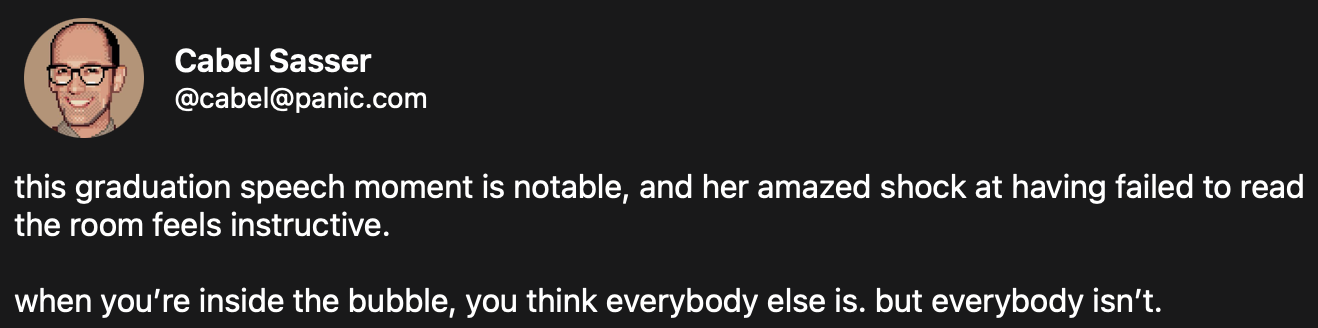
I welcome this change. Fear and anger have their place in emotional reactions, and just maybe, they’ll play a role in helping reset the AI hype. I remain convinced AI is just normal technology, and once the hype wears off, we can begin to more thoughtfully apply it where it’s best used, rather than cramming it into every area of society as if it were some kind of digital god.