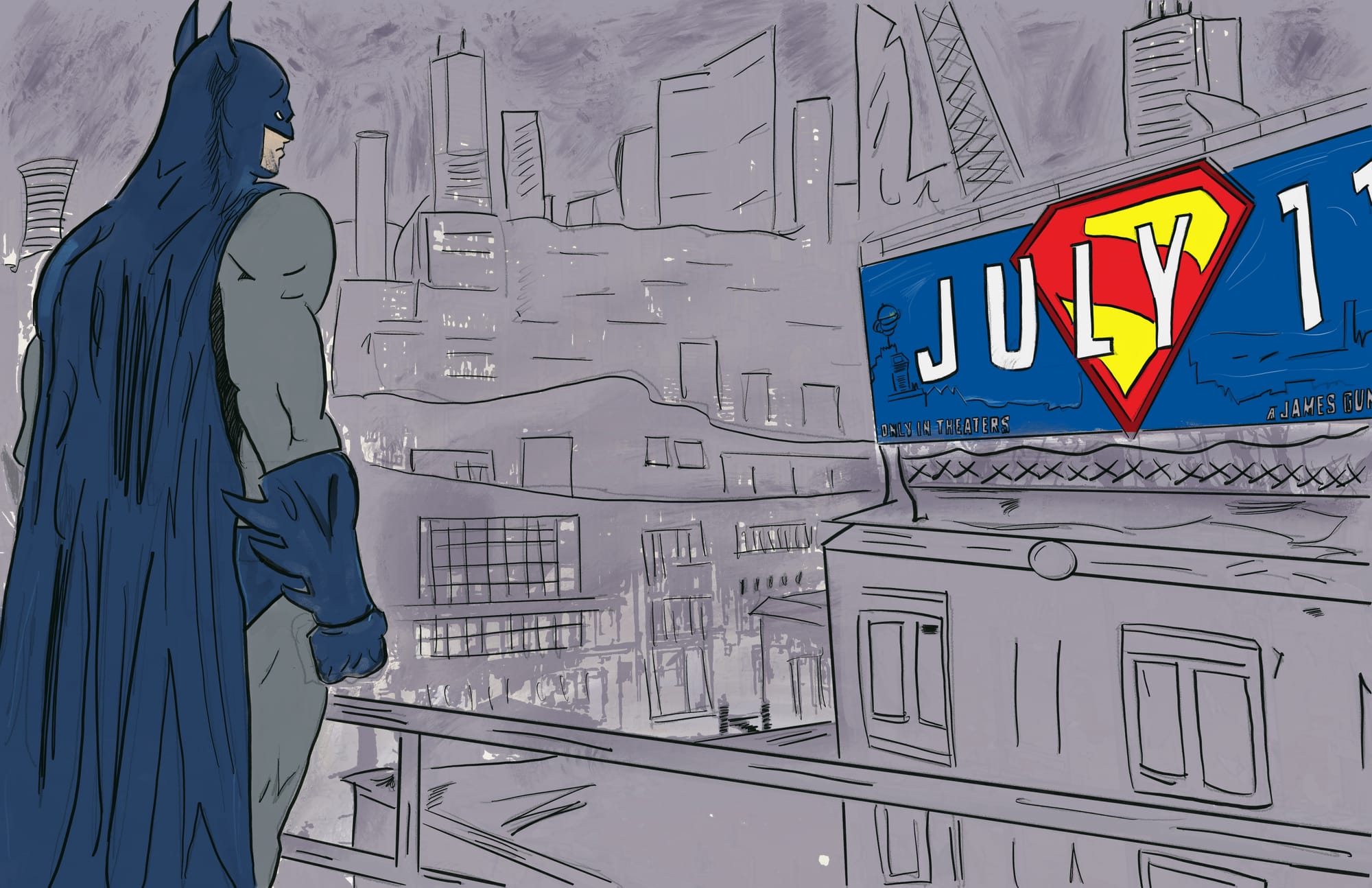
If you like Batman you should go read the new comic. It's a great jumping on point for lapsed comic readers. It's also everything I love about Batman – detective moments, great action pieces, a larger than life Gotham, and those villains. The art is so good. Issue #3 just released, so it's not too late to jump on this one. Go check it out now!
I haven't gotten to the reveal of the Hidden Reason Digital Comics Never Took Off in the latest episode of the Comic Industry Insiders podcast, but I'm already intrigued. I'm only 15-20 minutes into an hour and half plus episode, and they're already discussing the big questions. I'm linking to the episode for this reason: if you're thinking about the same sort of questions, questions of how digital content fits in with a traditional industry, you might find this episode really interesting.
I'm a comics fan, and I've been curious about what the Sweet team are doing with their new Sweet Shop digital comic store. I'm doubly curious because it seems like they're wrestling with what I think are the right questions – What makes a digital comics shop distinct from brick and mortar shops? Why do we need something new instead of just using Kindle? Why is it so hard for an online comics app to succeed?
While these are all comic industry question, the same sort of questions apply to almost any industry today that deals in content. At some point, your content business is going to have a traditional component and a new component. How do those compliment each other? How do they differentiate? How does technology enable that? How does technology get in the way?
We all need to be wrestling with these kinds of questions more, while also building out something new. I love hearing the thought process of anyone who is doing the same.
It's the Wednesday before Dragon Con. I woke up this morning humming "it's the most wonderful time of the year." That's right, it's nerd Christmas. Dragon Con 2025 is upon us.
I'm trying to maintain a less busy schedule this year. I have a couple panels in mind, but I'm trying not to overload myself with planned activities. My goals are to be immersed in comics and comic culture and to play Marvel Multiverse RPG with some new people. I've joined a Sunday session of the game at Dragon Con, but I'm hoping to find some one-off casual sessions, too. I'll report back on how that goes.
I'm also going without cosplaying this year. The days will be filled with comic t-shirts and shorts for comfort. For the nights, I'm going with superhero-inspired everyday where. There's a theme appearing here. Just go, no pressure, and have fun.
It’s not that I didn’t want to keep working on the comic. Of course I did. It’s just that I thought it’s life as a gen-AI prototyped comic was done. It started life as a proof of concept for the family writing content, After that, I thought I would use the pages to find an artist to work with me on the series. But then that never materialized either.
Finding an artist seems like the thing I ought to do. I want to support comics artists, and it's how proper comics are made. But it's hard to find an artist to work with, and the economics just don't make sense for a tiny web comic. I'm also really slow at working, juggling this as a side project.
There's also this – I really enjoyed working on Hartwell as a self-produced comic.
I feel bad about that. I don't want to live in a world where generative AI tools take work away from real comics artists. I'm also super conflicted. I think using generative AI tools can lead to new kinds of work and also empower slightly artistic folks like me to realize our dreams of making our own comics. I'm really interested to see where this kind of tooling and art can go.
So all that to say, I'm going back to working on Hartwell as a comic I make fully myself with the help of generative AI tools. I know there could be some controversy in this, and likely some folks will be disappointed I've made this choice. But I also just really want to get back to work on my comic. Let's just see where it goes from here.
As I mentioned in the intro post about my comic and the family writing contest, I spent a lot of time last year using generative AI tools to help me create a comic book. That comic is Hartwell. Please check it out. Without the help of generative AI tools, I almost certainly couldn’t have created the comic. I think it stands as a good example of what can be done with the help of AI technology.
Before we get into the specifics of what I did, let me just acknowledge that I don’t think my comic is a spectacular piece of art. It’s very amateur looking, I know. The main character isn’t consistently drawn. There are proportion and perspective issues. The lettering isn't consistent throughout. But – I think! – you can follow the story. That really was my goal here – to be able to create something as an example of the kind of comic I wanted to create.
This also speaks to what works well, and what doesn't work so well, when using generative AI tools. But more on that in the next post! This post is about how I created the sample comic pages.
Now that this 3-page prototype is done, I hope to use it as a demo to help me find a proper comic artist to partner with to help me with the web series. That's why it's just 3 pages. It's a demo or a prototype. If you're an artist interested in working with me on the series, let's get in touch!
That's what's behind the comic. So how did I do it?
Write a script and generate reference images
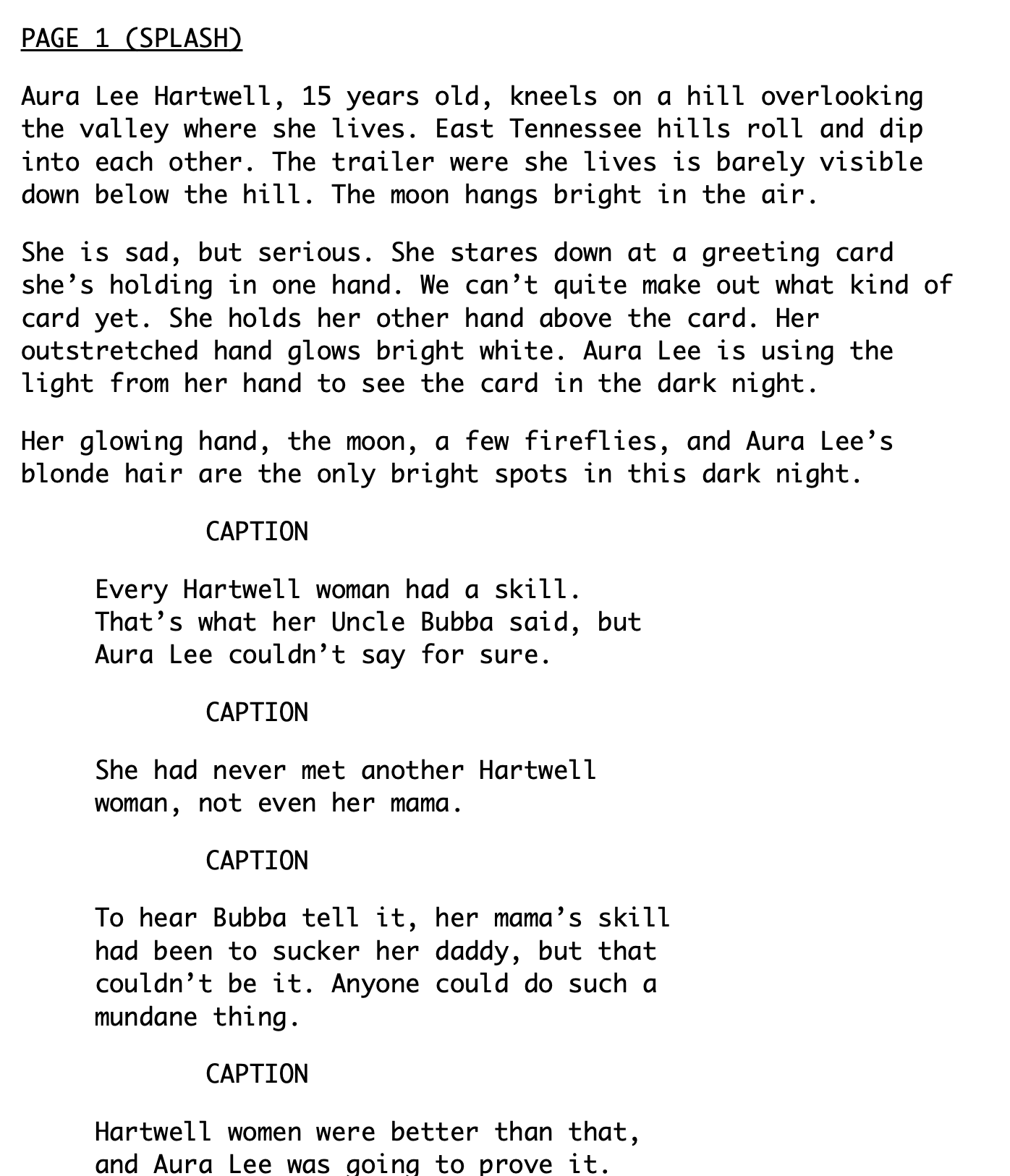
I built out the idea for this comic series as a writer would – by writing! I wrote a series pitch, character breakdowns, and a full series plot outline. I wrote a full script for the first issue based on that series outline. I didn't have a specific artist in mind when I wrote that first script, but I did write it as if I was going to work with an artist on the comic.
The opening splash page from the script
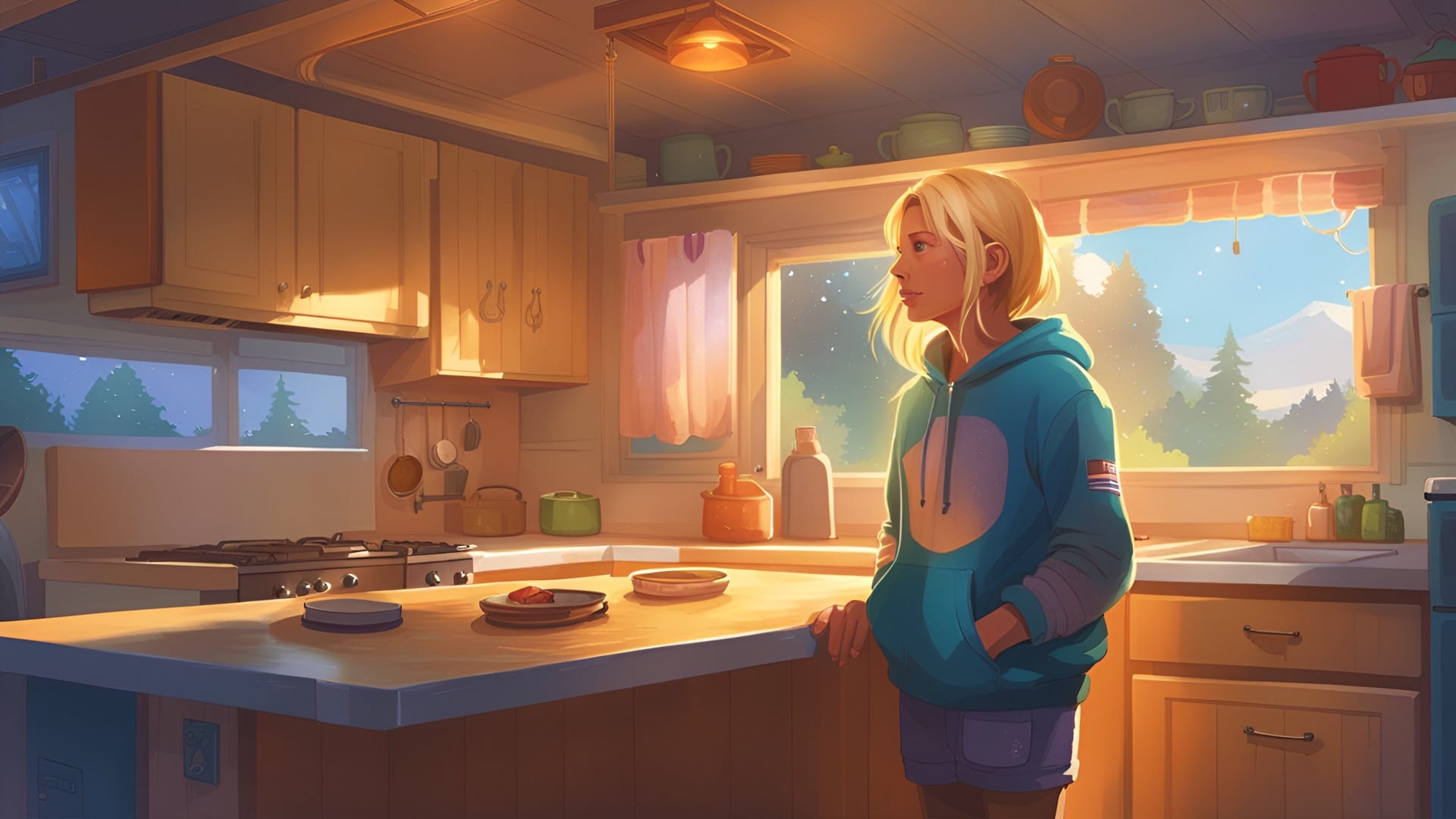
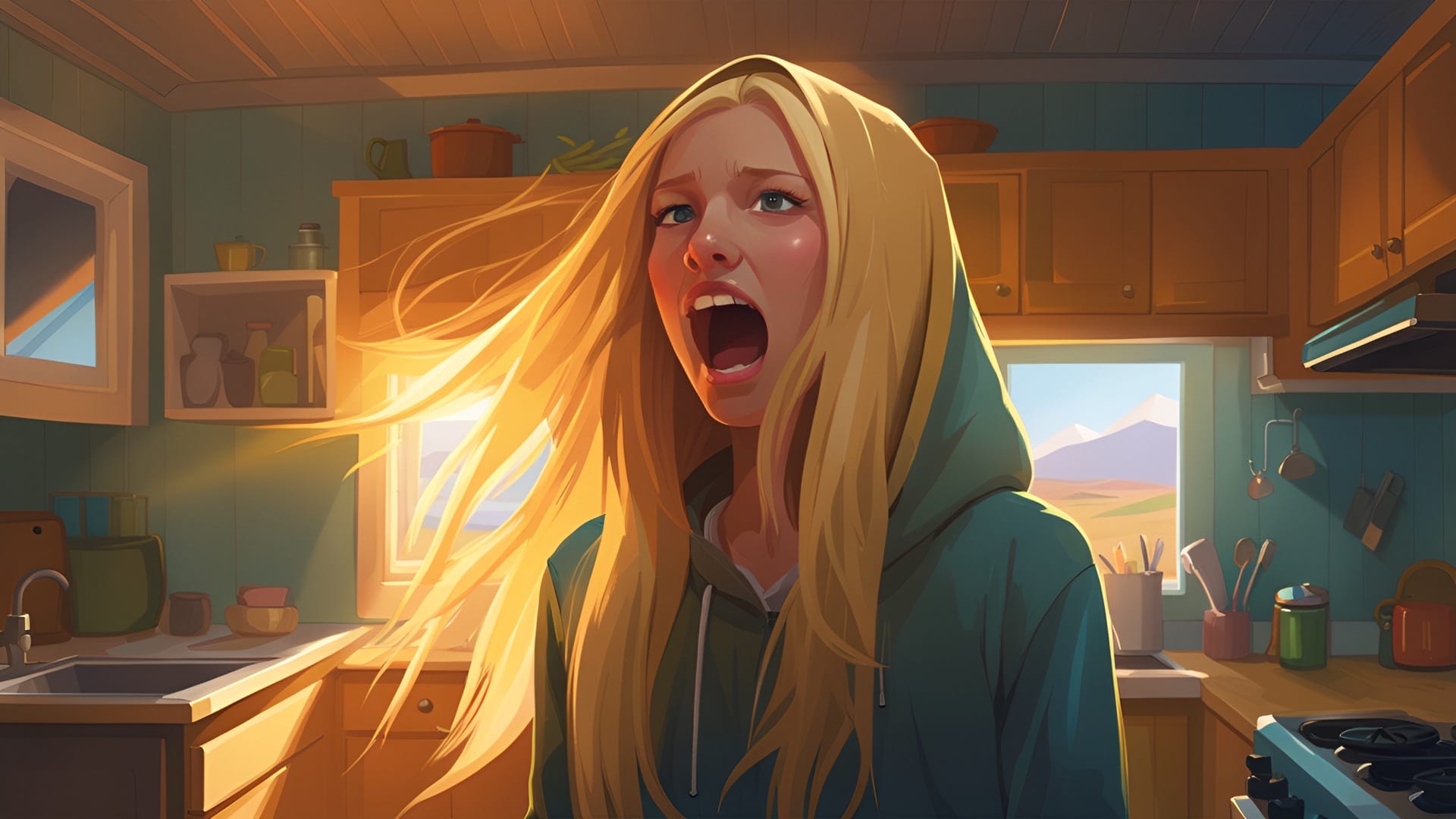
With the script done, I wanted to generate reference images for the first few pages. I really just pasted directly from the script into a few different generative AI tools. I tried them all, I think. I settled on Dream by WOMBO because the style was easiest to work from as reference images, at least for me. I also found Dream easy to use as an iPad app, since I was also using Procreate on my iPad for creating the comic.
A sample of reference images generated with Dream by WOMBO
To get usable reference images, I usually had to massage the text I pasted from the script. Generative AI tools can't keep track of a character like a human artist can, so "Aura Lee Hartwell" had to be replaced frequently with "a 15 year old blonde girl." This is also one of the limitations of these kinds of tools. It's all prompt hacking to get something you can work with.
I had a couple different techniques for getting images in a format that would work well with the page layout I wanted. Sometimes, I generated the images in the aspect ratio I wanted; sometimes I cropped them after they were generated. I did this because it's not always easy to get a usable image out of these generative AI tools. With images in the size and shape I wanted, I laid out the comic page, created page borders around them, and then dialed down the opacity of the reference images to allow me to sketch over top of the images.
Adding pencils, inks, colors, and lettering
From there, I tried my best to emulate how a comic art team would work. I started with pencils. Once I had the pencils, I hid the generative AI reference images layer. Then, I inked the page and added colors and the lettering. It was during this phase that I tried my best to pull each page together into a cohesive comic, trying to have a consistent character design and style to each page.
It's kind of hard to understand what I mean by this without seeing it in action. Procreate allows me to share the process I used, which is really nice. Here's a timelapse video of my work on one of the pages.
It's probably worth mentioning here that I do have some very basic art skills. I'm not a great artist, but I can draw a straight line. I've had a few art classes. I have loved comics and have doodled my whole life, but again, I'm not really a great artist. However, those art skills, insufficient as they were, did make it possible to pull all this together. I think that's the trick with generative AI. It helps someone with basic skill do something they couldn't otherwise do. It's never going to replace what a real artist can do, and it's not really able to help someone who can't imagine how to put the tool to use.
That's the story of how I came to create the prototype pages for Hartwell. I can't wait to share how this comic grows and develops once I start working with a real artist on it.
Every year, my family has a family writing contest. The first year, it was a thing my older daughter and I did on a whim. There’s this church out in the boonies where we have a family Christmas get together. It’s a long drive out there, so we passed the time making up stories using the phrase “the church at the end of the road.” From there, a plan was made — we would each take the remaining two weeks before Christmas and write our own short story based on this prompt. The rest of our family – my wife, the aunts and uncles – would pick the winner. This is how the family writing contest was born.
My daughter won that round, but I ended up with a short story appropriately called "The Church at the End of the Road." I’m happy with the story, even if I lost the contest.
We held the family writing contest again last year. This time my younger daughter joined in. She had been developing her craft as an actor and screenwriter. We decided this year would be longer works, so the three of us devoted the entire year to a long work. My older daughter worked on a fantasy epic novel, my younger daughter a screenplay. I decided to pursue a life-long dream to create a comic book series. Neither my older daughter nor I fully completed our works. We were too ambitious. My younger daughter’s screenplay was not only complete, but also, a really good story. She won the second round, but like the first round, I was left with something I’m really proud of.
Go check out my site for Hartwell. Hartwell is a Southern Gothic family drama for all ages set in a realistic setting where extraordinary powers and spectacular events are everyday occurrences. I was able to create this comic because I used generative AI tools to help me. In my next post, I’ll explain what that process was like and what I think works well, and what doesn’t work so well, with generative AI tools.
Oh, and the family writing contest continues this year! We’re working on our pieces through out the year, just like last year, and this time, my sister and brother are joining in. More on this year’s contest at some point later in the year.