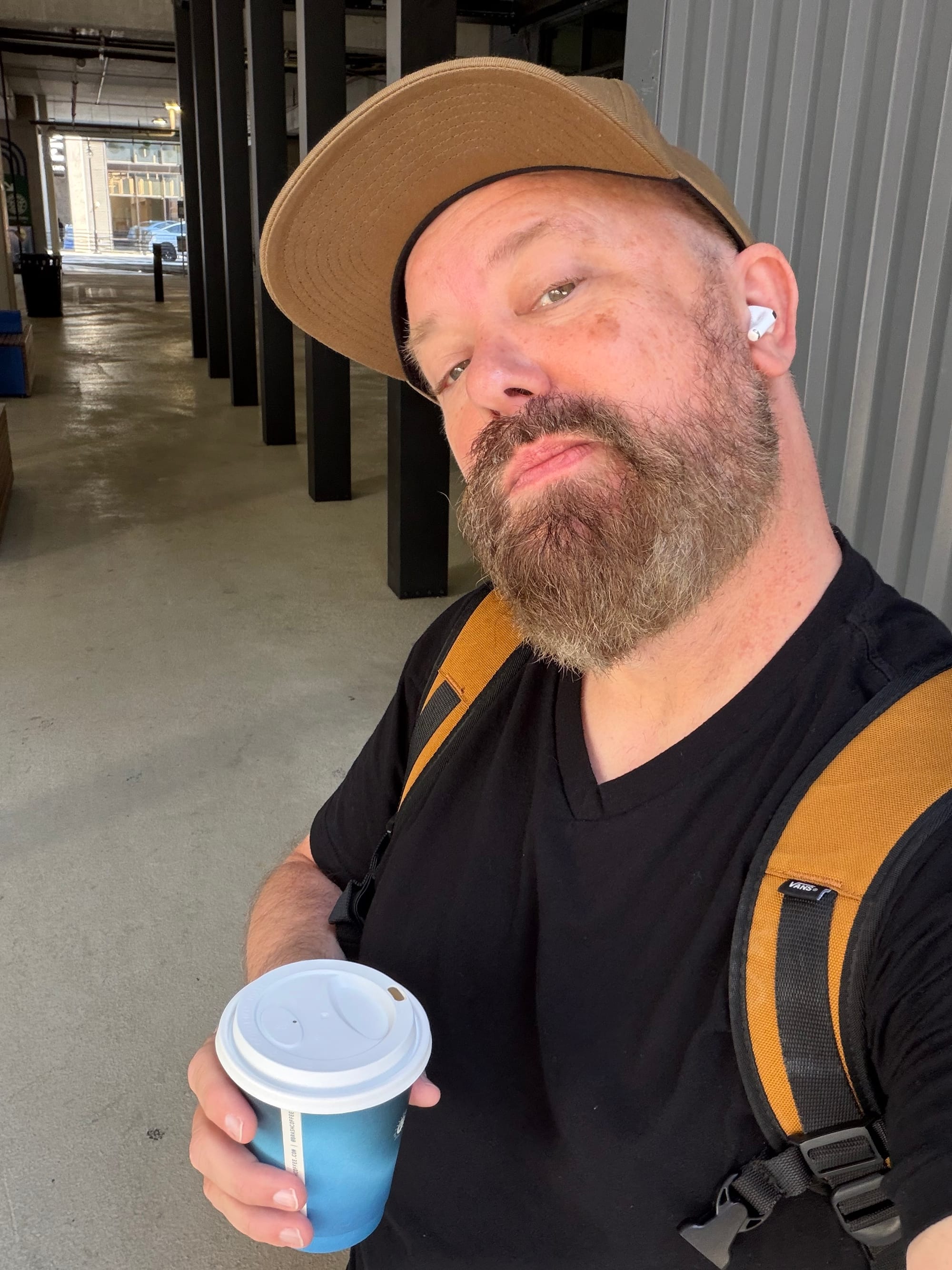
The new year is here, and I'm naturally in a reflective mood. What a year 2025 was for me. I changed jobs, saw my youngest graduate and start college, moved twice, and so much more. I expect 2026 to be less chaotic and more focused. At least that’s what I’m hoping for.
I've never been one for New Year's resolutions. I don't like the idea of making plans once and executing on them. I'm more of a be in the moment and adjust as you go kind of person. But even with that, I can't help but look ahead and think about what I'd like to get done this year.
To say I'm grateful for this job is an understatement. My prior two roles didn't work out as I had hoped. I was starting to get a bit down about my ability to land something that could be a long-term role for me. CNN came along at the perfect time. I've now got a role where I enjoy the work I do, it's a good technical fit for me and my expertise, and I've got great colleagues to share the journey with. I want to maintain that, so any plans I have around work are to be consistent in my role and try to grow within it.
We're doing more with Rust and edge compute, so I want to really learn Rust well this year. I've dabbled before, and I know enough Rust to be dangerous. I want to grow my technical expertise there. I also want to re-up my connection to Python and the Python community. I'm thinking of going to PyCon this year. For all my experience in Python and its open source community, I've never been to a PyCon. I hope to change that this year. I'm thinking about re:Invent this year too. AWS is a mainstay in my toolkit, both personally and at work, and I'd like to be more involved in re:Invent, even if it's the end of the year before we get there.
Outside of work, I'd like to spend more time with the things that help me feel more present.
One of those is travel with my wife. We're empty nesters now, and we've been talking about taking more weekend getaways. It feels cliche to say it, but it's true – my wife Wendy really is my best friend. We enjoy each other's company, and we love travel. I'm excited about visiting nice locales within a day trip of Atlanta. I hope to literally get away more as often as we can.
I also want to find some opportunities to play more of the Marvel Multiverse Role-Playing Game with friends or other local Atlanta players. I love superheros, comics, and playing games with friends. MMRPG combines all those. I took up the game a little over a year and played a few times last year. I'd like to really lean in this year and play more, especially in person with others in Atlanta.
So 2026, here we go. Onward and upward. More focus. More living in the present. And hopefully I'll do a little better at sharing updates on all that here on my blog.
The Ministry of Time by Kaliane Bradley. Cannot put this down or say enough good things about how I’m enjoying this book.
Catching up on a bunch of tech news pieces and blog posts I marked in Tapestry.
Watching
Latest episode of Pluribus — I can’t say enough good things about this show.
Binging Outlander with my wife. We’re currently starting on Season 4.
And speaking of Outlander…
We’re going to the GA Renaissance Festival on Saturday. My daughter loves it, and my wife and I are going to check it out. I’m going in Scottish Highland attire.
My family is giving me no end of grief suddenly getting in touch with my Scottish heritage since watching Outlander. But it’s a fun escape this weekend, and feels overdue with the week behind.
I’m thinking a lot about writing lately. I also spend a lot of my time working on technology. There’s actually a tension there. It might not be obvious, but it’s there. Writing is about slowing down, savoring the language. Every. Single. Word. Technology is about speeding things up, about doing more with less. The oft talked about, and (depending on your perspective) dreaded: productivity.
I was out walking earlier this week, here in Atlanta, maybe headed into work, maybe out for exercise. I was on this part of a street near my home where the trees dotted both sides of the road as it stretched out toward the horizon. High-rise apartments and corporate offices stood off in the distance, reaching into the clear, blue sky. People were walking by, listening to music on their iPhones. The AirPods were the give away. A lone Uber delivery robot was creeping up the sidewalk across from me, and I thought, “Wow, I’m living in the present and the future, all at the same time.”
That’s writing and technology. One takes us into the future, the other makes us present. The world is a little slanted toward technology at this point, and it shows. We're starting to wear under the weight of that singularity. There's a work around, though. It's being present and writing about it.
This is one of the coolest things I've seen in awhile. Jmail (via Daring Fireball). This whole thing is so clever, the way it mimics the look and feel of Gmail, including the supposed "AI Overview" explaining the site.
You are logged in as Jeffrey Epstein, jeevacation@gmail.com. These are real emails released by Congress. Explore by name, contribute to the starred list, search, or visit a random page.
A lot of less experienced and mediocre engineers likely think these tools are brilliant. They’re producing more code, feeling productive. The problem is they don’t see the quality problems they’re creating.
This is compared to the experienced coder.
They’ve lived with the consequences of bad code and learnt what good code looks like. When they look at AI-generated code, they see technical debt being created at scale. Without proper guidance, AI-generated code is pretty terrible. Their scepticism is rational.
Then, this paragraph really caught my eye:
I’ve regularly seen sceptical experienced engineers change their view once they’ve been shown how you can blend modern/XP practices with AI assisted coding.
I got caught up in this "modern/XP practices" phrase. I was like, "are we talking about Extreme Programming here?" I hadn't really thought about that in a while, or considered it "modern." So I went and looked it up to remind myself and found this Martin Fowler post on extreme programming from a decade ago.
XP was one of the first agile methods, indeed XP was the dominant agile method in the late 90s and early 00s before Scrum became dominant as the noughties passed.
For a lot of folks today, "scrum" is synonymous with "agile," for better and for worse. But there's a whole world of agile techniques out there. Falling down this XP rabbit hole was a good reminder of this for me.
So what, exactly, is XP? According to Fowler:
It popularized many practices that have since been widely used in software development, including: continuous integration, refactoring, TestDrivenDevelopment, and agile planning.
I would add "small, frequent changes" to that list too, and then other than TDD, just call this "good engineering" today.
To bring it back to AI, where we started above: AI will change how we write software. It's already doing that, but then, good engineering practices endure. Those good engineering practices can serve as a framework for understanding how best to use LLMs and other AI-based tools.
For a long time, I’ve let the ideal of the perfect writer’s life keep me from writing. Waiting on inspiration, a quiet room, or the perfect lighting. It has never worked out like that, which means I never find time to write.
I’ve stopped doing that. I’m just writing whenever now, wherever I can. In paper notebooks when I have 15 minutes at lunch. With a stylus on my Kindle while the TV plays in the background. I wrote this post in a notes app on my phone while lying in bed.
If you like Batman you should go read the new comic. It's a great jumping on point for lapsed comic readers. It's also everything I love about Batman – detective moments, great action pieces, a larger than life Gotham, and those villains. The art is so good. Issue #3 just released, so it's not too late to jump on this one. Go check it out now!
I haven't called this site a blog in a while. I usually say "my site" or "my personal site." It feels liberating to just call it what it is, a blog.
I like blogging. In fact, it's largely responsible for how I ended up a professional programmer. I liked writing. I was dabbling in building web sites. I started running my own blog. And now, here we are.
You should like blogging too. We need more blogging, truly. There's a bit too much social media and micro blogging. Nothing wrong with that, but spend more time with your words. Put them up on your own site. Errrr, your own blog. There's something nice about owning it all yourself.
So with that in mind, I'm going to spend less time thinking about what this site should be and just blog. I'll be writing about the things that interest me. Technology. Programming. Writing. The arts. Media. More writing, less over-thinking. Let's just see where that leads.
In every language discussion, two conversations are happening simultaneously.
We all know this intuitively if not explicitly. There's the technical discussion and then there's whatever else is going on underneath. Francia explains why that second, "invisible conversation," as he calls it is happening.
They’re not just analyzing technical trade offs, they’re contemplating a version of themselves that doesn’t exist yet, that feels threatening to the version that does.
Go read the whole thing. It's well written and researched. There are some great practical tips here for how to reframe the discussion from the purely technical debate it's pretending to be.
Tech companies tend to focus on process, data, and engineering practice. Media companies focus on the humans driving the technology. Great software engineering orgs should have a balance of both.
It's a high bar, to be sure, but occasionally, companies do get this right. I've been watching sessions from the current Ubuntu Summit the last couple days, and I'm reminded that Canonical did pretty well at this when I was there.
When I joined, Ubuntu was using the tagline "Linux for human beings," and one of the things I really enjoyed about working there was the diversity of humans working at Canonical, the level of interest in human endeavors outside of tech, and the technical rigor we undertook in our work. There was a lot of effort on the teams I was on to figure out our development process, how to structure our work, and how to deliver value on the six-month Ubuntu cadence. There was also a recognition of humans behind the technical work, and I had great chats with colleagues there about art, literature, gaming, and more. I suspect this says as much about open source development as it does Canonical, but I did think about it while watching these Ubuntu Summit sessions recently.